Introduction
Search for this topic and you’ll type something slightly different depending on how you think about it — “digital invoicing system,” “digital invoicing app,” “digital invoicing software,” “cloud invoicing.” They usually describe the same underlying need: a way to issue invoices that are properly reported to FBR in real time. But the words you pick hint at different expectations, and it’s worth understanding what actually distinguishes them before you evaluate anything.
What a Digital Invoicing System Actually Is
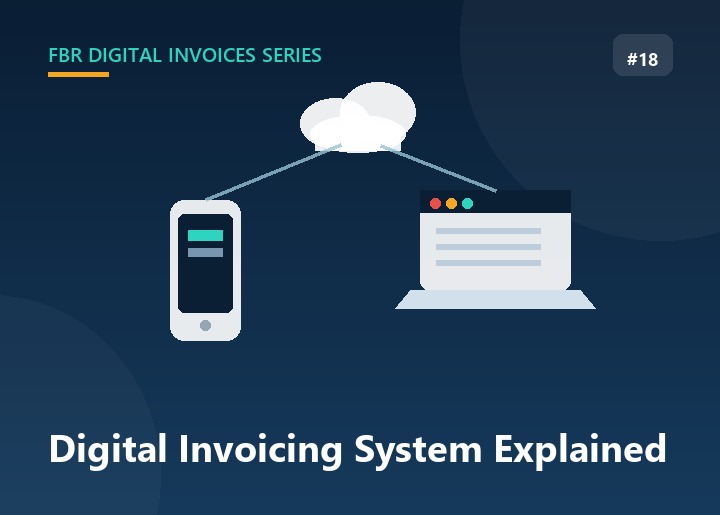
At its core, a digital invoicing system is software that generates invoices, calculates tax, and — for FBR compliance in Pakistan — transmits each one in real time to receive a valid IRN and QR code. Everything else (how it’s accessed, what device it runs on, what it’s called) is a matter of delivery, not function.
Three Common Terms, and What Each One Usually Implies
“Digital invoicing software” is the broadest, most traditional term. It doesn’t tell you much about how it’s delivered — it could be installed locally, run in a browser, or both.
“Digital invoicing app” usually signals mobile-first expectations — issuing an invoice from a phone at the counter or on the go, rather than sitting at a desktop.
“Digital invoicing cloud” / “cloud-based system” signals something specific: browser-based, no installation, accessible from any device, and typically synced automatically across users and outlets.
Here’s the thing worth knowing before you search further: in practice, most legitimate solutions available in Pakistan today are cloud-based with a mobile-friendly interface — meaning they satisfy the “app” and “cloud” expectations at once. The terminology gap is smaller than it looks; what actually varies between products is capability, not category.
What to Actually Evaluate, Regardless of Which Term You Searched
Rather than picking based on the label, these are the capabilities that determine whether a system will actually work for your business:
- Real-time FBR validation — not just invoice creation, but a genuine live submission behind every IRN and QR code.
- Accessible from anywhere — a proper web/cloud interface that also works cleanly on mobile, so you’re not choosing between “app” and “desktop software.”
- Automatic GST calculation — removing manual tax-rate errors, one of the most common causes of rejected invoices.
- Multi-user, multi-outlet support — important the moment you’re not a single person running a single till.
- Integration with your existing POS or ERP — rather than requiring you to rebuild how you already operate.
- Secure storage and audit logs — invoices need to be retained for years, not just generated and forgotten.
- A straightforward way to share invoices with customers — WhatsApp delivery, PDF, or similar, so the compliant invoice actually reaches the buyer, not just FBR.
A product that markets itself well under one of these labels but is missing several of these still isn’t the right choice — and a product with an unfamiliar label that covers all of them usually is.
The Mistake Worth Avoiding
Choosing based on the search term that got you there — “I searched for an app, so I want an app” — is a common but avoidable trap. What actually matters is whether the underlying system does real-time FBR validation reliably, not whether its marketing page calls itself an app, a cloud platform, or software. Evaluate the capability list above regardless of which term brought you to a given product.
Where FBR Digital Invoices Fits
FBR Digital Invoices is built as a cloud-based platform — accessible from a browser on any device, with no installation required — covering the capability list above directly: real-time FBR validation, automatic IRN and QR code generation, automatic GST calculation, multi-user access, API integration with your existing POS or ERP, and WhatsApp invoice sharing. Whichever term brought you here — system, app, or cloud — the underlying question is the same, and that’s what it’s built to answer.
FAQ
Is a “digital invoicing app” fundamentally different from a “digital invoicing system”? Not usually — “app” typically just emphasizes mobile access. Most modern systems that call themselves apps are the same underlying cloud platform with a mobile-friendly interface.
Do I need a desktop application, or is cloud-based enough? For nearly all businesses, cloud-based is not just enough — it’s the better choice, since it works across devices, doesn’t require installation or updates, and keeps your data accessible even if a single device fails.
Can I switch between a mobile app and a desktop/browser version later? With a properly built cloud-based system, yes — since the data lives centrally rather than on one device, switching how you access it doesn’t mean switching systems.
What matters most when comparing two options that both claim FBR compliance? Whether real-time validation is genuine and reliable, not just present in the marketing copy — ask specifically how IRNs and QR codes are generated and what happens when a submission fails.
Conclusion
“Digital invoicing system,” “app,” “cloud,” “software” — these searches usually lead to the same destination: a platform that validates your invoices with FBR in real time and makes issuing them straightforward. The label matters less than whether the underlying system actually delivers on real-time validation, accessibility, and reliability. FBR Digital Invoices is built around exactly those fundamentals, regardless of which term brought you here.